AER1202 Advanced Flight Dynamics
Dynamics, Stability and Simulation · Graduate course · University of Toronto · Fall 2026
This graduate course covers fixed-wing aircraft flight dynamics, with a focus on stability and control. It develops a complete skill set for fixed-wing flight simulation, stability analysis, and flight-control design, with an emphasis on state-space control methods and Simulink-based simulation.
On completing the course, students are able to perform quantitative analysis of an aircraft’s dynamic behaviour and carry out the systematic design of flight-control systems that improve its dynamic performance.
| Instructor | Dr. Longhao Qian · longhao.qian@mail.utoronto.ca |
|---|---|
| Lectures | Wednesdays, 14:00–17:00, AS158 |
| Term | Fall 2026, September 16 to December 16 |
Course structure
The lectures progress from flight dynamics and classical control, through Simulink simulation and state-space control design, to trajectory control and state estimation.

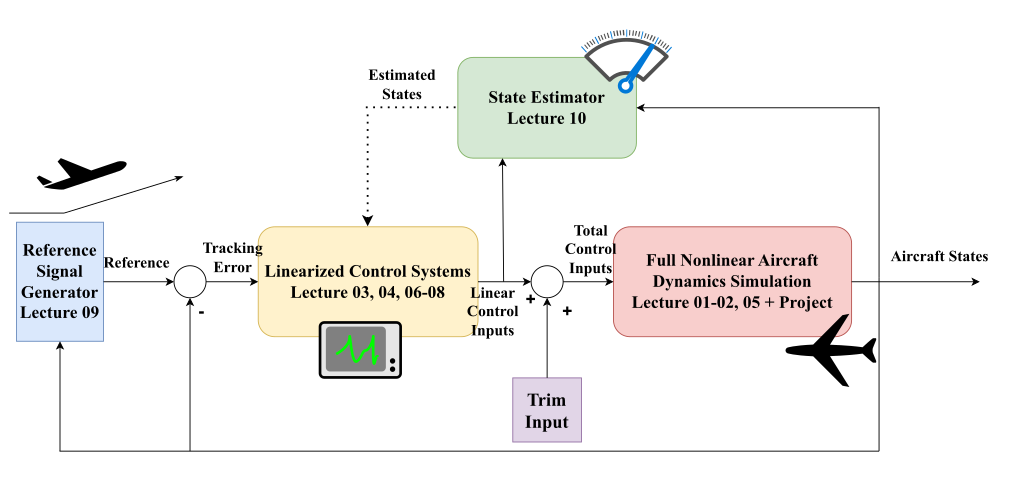
The lectures build the components of a complete closed-loop flight-control system around a full nonlinear aircraft simulation.
Course materials
- Syllabus: learning goals, prerequisites, grading, timetable, and course policies.
- Lectures: slide decks for each weekly lecture.
- Tutorials: tutorial slide decks.
- Readings: the course textbook and the reference handouts.
Assignments, submissions, grades, and announcements are managed through Quercus and are not posted on this site. Office hours are arranged on request by email, and Quercus is the preferred channel for course communication.
Acknowledgement
The slides and handouts on this site were developed with reference to course materials by Professor Hugh H. T. Liu, author of the course textbook, Analytical Aircraft Flight.